


Every logistics provider will tell you they’re reliable, responsive, and built to handle your business. The brochures look the same. The promises sound the same. And the price quote? That’s usually where the conversation ends, and where most companies get into trouble.
The consequences of choosing the wrong logistics partner won’t show up on Day 1. You’ll feel it when a time-sensitive shipment gets delayed, when a high-value piece of equipment is mishandled, or when no one can answer the phone because accountability was never built into the relationship.
This guide is for procurement, supply chain, and logistics leaders who are ready to look past price comparisons and evaluate partners on what actually matters: execution, risk management, and accountability.
The Biggest Mistake Companies Make When Choosing a Logistics Partner
It’s price. Almost always.
On paper, many transportation and logistics providers look nearly identical. Similar service lists, similar coverage areas, similar sales pitches. So buyers default to the number that’s easiest to compare: cost per shipment, cost per mile, or total quote.
But execution risk doesn’t live on a spreadsheet. It shows up when coordination breaks down across multiple vendors, when a provider relies too heavily on third-party carriers, or when a complex shipment hits an unexpected snag and there’s no one empowered to solve it.
The lowest-cost option often introduces the highest operational risk. In industries where downtime is costly, that’s a tradeoff companies often don’t realize they’ve made until it’s too late.
What to Look for Beyond Basic Service Offerings
Most providers can list services. Fewer can actually integrate them.
When evaluating a logistics partner, look past the service menu and dig into how they execute.
Key questions to ask:
- Do they operate their own fleet, or are they primarily a broker?
- How do they coordinate across services, including transportation, warehousing, and rigging?
- Who is accountable from pickup to final delivery?
- What specialized equipment do they have, and can they match it to your specific shipment requirements?
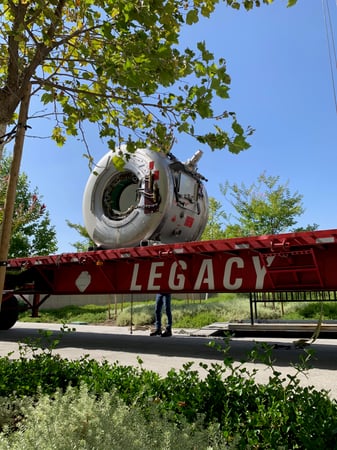
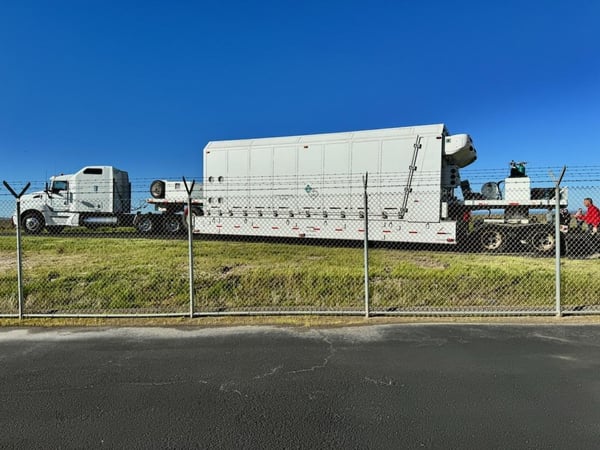
That last point matters more than many buyers expect. Not all fleets are built the same. Specialized equipment, such as liftgates and high-cube trailers, can make a meaningful difference when handling sensitive or high-value shipments.
A true logistics partner will manage planning, communication, and execution as one connected process, reducing handoffs and improving consistency at every stage.
Red Flags to Watch for During the Evaluation Process
A logistics partner will ask about your timelines, site access requirements, internal coordination, and contingency planning, because they’re thinking about what could go wrong before it does.
That proactive mindset is what prevents problems from materializing. It’s also one of the clearest signals you can get during the evaluation process, before you’ve signed anything.
A transactional provider will focus the initial conversation on pickup details and delivery windows. Watch for these warning signs:
- Vague answers about process. If a provider can’t walk you through how they’d manage your shipment from start to finish, that’s a gap in execution, not just a communication issue.
- Unclear accountability. Who owns the outcome? If they can’t name the person responsible for your shipment, no one is.
- Heavy reliance on third parties. Every additional handoff is an additional point of failure. Understand how much of the work the provider actually controls.
- Equipment mismatches. If a provider can’t explain what equipment they’ll use for your specific shipment, or if they’re defaulting to standard trailers for specialized goods, expect delays, added handling, and increased risk of damage.
These aren’t just evaluation inconveniences. They’re previews of what working with that provider will actually feel like under pressure.
What Accountability Actually Looks Like in Practice
“Accountability” is one of those words every provider uses and almost no one defines. Here’s what it should actually mean.
Real accountability means one team owns the outcome from start to finish. There is a single point of contact, someone you can call who is responsible for scheduling, equipment coordination, and problem resolution. Not a call center. Not a rotating cast of representatives. One person, one outcome.
At Legacy, clients work with a dedicated account manager who owns every aspect of their shipment, from initial planning through final delivery. That structure isn’t just a service model. It’s what prevents things from falling through the cracks when complexity increases or conditions change.
When evaluating a provider, ask directly: “Who is my single point of contact, and what are they responsible for?” The answer, or lack of one, will tell you a great deal about how that relationship will function when it counts.
What a Premium Logistics Partner Will Offer
When you strip away the sales language, a strong logistics partner should be able to demonstrate the following:
- Asset-based operations with a fleet they own, maintain, and control, not just broker access to capacity
- Specialized equipment matched to your shipment requirements, including liftgates, high-cube trailers, and more
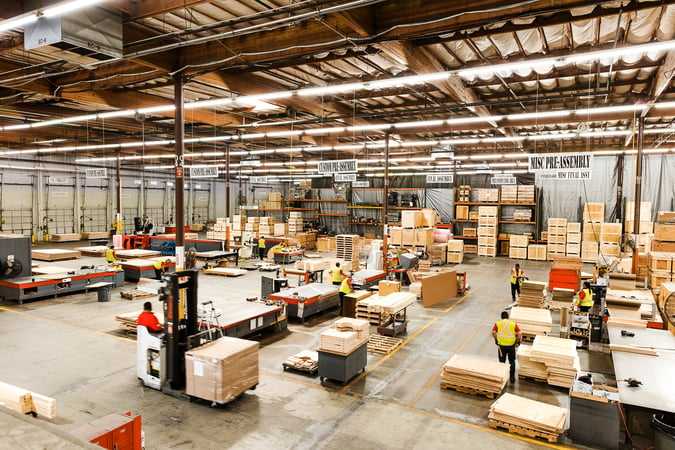
- Integrated services spanning transportation, warehousing, and rigging under one coordinated structure
- A dedicated point of contact who owns your account and is reachable when things change
- Proactive communication before, during, and after every shipment, not just when something goes wrong
- Industry-specific experience with the shipment types and operational challenges relevant to your business
Legacy brings all of this under one roof as an asset-based, high-touch logistics partner, serving across a range of industries. Transportation, warehousing, and rigging are all coordinated as one connected operation.
Ready to Find a Logistics Partner That Actually Shows Up?
If your current transportation and logistics setup feels more transactional than collaborative, you’re not alone, and you don’t have to settle for it.
Legacy was built for companies that need more than a carrier. They need a partner who plans ahead, communicates clearly, and takes ownership of every shipment from origin to destination.
Start the Conversation with Legacy today and see what a high-touch logistics partnership looks like in practice.