


Cheap carrier decisions are usually made for practical reasons. Reducing upfront cost feels responsible, especially when procurement teams are under pressure to control spend and keep shipments moving in complex transportation and logistics environments.
On paper, the savings look clear. What doesn’t appear in the spreadsheet is what happens when execution breaks down. A missed delivery window, damaged goods, or a last-minute reroute shifts the cost elsewhere, landing with operations teams, account managers, and leadership, often at the worst possible moment.
Over years of supporting time-sensitive and complex shipments through specialized logistics services, a consistent pattern emerges. When cost is evaluated without considering execution, the same problems surface again and again.
This blog outlines where cheap carrier decisions most often fail once execution begins, and why preventing those failures is easier than most teams expect.
1. Hidden Costs Appear When Shipments Stop Moving
Low-cost quotes usually assume everything goes exactly according to plan. In real logistics environments, that rarely happens.
When a shipment arrives late, the meter starts running. Crews wait. Overtime kicks in. Schedules unravel. If something is damaged, replacement or remanufacturing becomes part of the equation. Redelivery fees and added charges tend to appear only after the shipment is already off schedule, when options are limited and pressure is high.
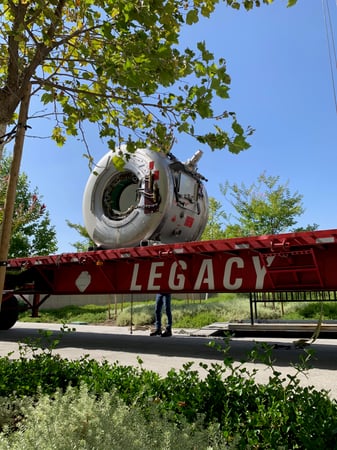
These costs escalate quickly in healthcare, aerospace, and trade show environments where delivery windows are fixed and recovery time is minimal. At that point, the issue is no longer price, it’s containment, particularly for high value logistics scenarios.
What reduces this exposure is not aggressive cost cutting, but realistic planning. Accounting for site access, unloading constraints, and enough time before a shipment is scheduled removes many of the failure points that create surprise costs later.
2. Damage and Rework Follow When Complex Shipments Are Treated as Standard
General carriers are built to move volume efficiently. That model works for standard goods, but it breaks down when shipments require careful handling or precise timing.
When complex shipments are treated like standard freight, small mistakes compound. A loading shortcut leads to damage. Damage leads to rework. Rework leads to delays that no amount of expediting can fully recover.
More stable outcomes come from planning around the shipment itself. Matching equipment and handling methods to the sensitivity of the goods, rather than forcing the shipment into whatever equipment is available, reduces risk before the truck ever leaves the origin.
This is where specialized logistics services quietly prevent problems, so that issues like these never become incident reports.
3. Accountability Gets Diluted Across Too Many Handoffs
Many logistics failures are caused by too many people touching the same shipment.
When brokers and subcontractors are involved, accountability tends to blur. If an issue arises, responsibility shifts between parties, updates fragment, and decisions slow down. Operations teams end up coordinating conversations instead of managing execution.
Fewer disruptions occur when one party maintains oversight from planning through delivery. Clear ownership shortens response time and makes it easier to solve problems before they escalate, especially when timelines are tight and stakes are high within transportation and logistics operations.
This kind of accountability is less visible than pricing, but it has an outsized impact when something changes mid-shipment.
4. Cheap Decisions Become More Expensive as Complexity Grows
A low-cost approach can work for occasional, low-risk shipments. Problems tend to surface as volume increases or timelines tighten.
Using multiple low-cost providers introduces more handoffs, more variability, and more internal coordination. Each additional vendor adds another process to manage and another opportunity for misalignment.
Teams that experience fewer disruptions over time usually prioritize consistency over constant re-bidding. Fewer vendors, repeatable planning, and partners that can support additional locations or shipment volume without changing standards make growth easier to manage.
The cost difference is often marginal. The operational difference is not.
5. Growth Stalls When Logistics Can’t Keep Up
Cheap carrier decisions often work until the business changes.
New locations, increased shipment volume, tighter timelines, or more sensitive goods expose gaps quickly. What once felt manageable turns into a patchwork of vendors, processes, and workarounds that slow teams down instead of supporting growth.
At that point, logistics becomes a constraint rather than an enabler. Internal teams spend more time coordinating providers, aligning schedules, and resolving inconsistencies than focusing on expansion or improvement.
Organizations that scale more smoothly treat logistics as a long-term capability, not a series of one-off transactions. Consistent standards, fewer handoffs, and partners that can support additional complexity without resetting the process make growth easier to sustain.
The Pattern Is Predictable
Cheap carrier decisions keep backfiring because they are evaluated too narrowly.
When organizations focus only on the number in the quote, they overlook the cost of delays, damage, rework, and internal disruption. Over time, those hidden costs outweigh the initial savings.
Teams that see fewer surprises are not ignoring cost. They are measuring it differently, with execution, accountability, and operational impact included from the start.
That shift doesn’t eliminate risk, but it does stop teams from being surprised by the same problems again and again.
If your team is rethinking how carrier decisions affect execution, it may be time to change how those decisions are evaluated.
Start the conversation to have a more informed conversation about execution, risk, and long-term value with Legacy.